

When Noah stepped out of the ark after more than a year, the world was silent, washed clean, and full of potential. Every tree, mountain, and valley looked different. Humanity had been reduced to eight people, and creation itself felt like it had been reset. In this moment of fresh beginnings, Noah’s first act was not to rebuild his home or secure resources, but to worship. His altar of thanksgiving became the starting point of God’s next great declaration of grace: His covenant never again to destroy the earth with a flood.
This passage reminds us that God brings mercy out of judgment, order out of chaos, and promises out of devastation. It also reveals deep truths about worship, gratitude, God’s faithfulness, and the way He calls His people to live in light of His covenant.
Worship Before Work
Scripture tells us: “Noah built an altar to the LORD” (Genesis 8:20). The first thing Noah did wasn’t to explore, build, or celebrate. He built an altar and worshiped God. This is the first altar mentioned in the Bible. Noah offered burnt offerings from the clean animals still preserved on the ark, acknowledging that everything he had; life, family, future, came only by God’s grace. His worship pleased God, who responded not with further judgment but with compassion.
God declared, “Never again will I curse the ground because of man… never again will I destroy all living creatures” (Genesis 8:21). Even though human hearts remained inclined toward sin, God chose mercy.
Ecclesiastes 7:20 (NLT)
“Not a single person on earth is always good and never sins.“Romans 3:23 (NLT)
“For everyone has sinned; we all fall short of God’s glorious standard.“
This altar stands in contrast to Cain’s earlier offering (Genesis 4:3–5). Noah’s sacrifice came from a place of gratitude, humility, and trust. Worship was not an afterthought for Noah, it was the natural response of a heart that understood undeserved salvation.
As Romans 12:1 later teaches, our lives are to be living sacrifices, daily worship flowing from the grace we have received.
Seedtime, Harvest, and the Stability of God’s World
After receiving Noah’s worship, God declares a promise regarding creation itself: “As long as the earth endures, seedtime and harvest, cold and heat, summer and winter, day and night will never cease” (Genesis 8:22).
This is an astonishing commitment. The chaos of the flood will never be repeated. The rhythm of seasons, the cycle of planting and reaping, the reliability of day and night, all are signs of God’s ongoing faithfulness.
This verse forms the foundation for human flourishing. Agriculture, growth, stability, and work are possible because God sustains the world with predictable order. Psalm 104:27–30 echoes this, describing how God continually provides for creation. James 1:17 reminds us that every good gift, including the very consistency of creation, comes from the Father of lights.
Even in uncertain times, God’s created order remains steady because He Himself is steady.
Food and the Sacredness of Life
After the flood, God gives a new instruction that contrasts with Genesis 1–2. Originally, humanity was given every plant and fruit for food (Genesis 1:29). Now God expands this: “Everything that lives and moves will be food for you” (Genesis 9:3). Meat becomes permitted, but this allowance comes with a sacred condition: they must not eat flesh with its blood still in it (Genesis 9:4).
Leviticus 17:11a (NLT)
“for the life of the body is in its blood.“
In Hebrew thought, life is in the blood. By requiring the blood to be drained, God teaches that life is holy and belongs to Him. This theme points forward to the sacrificial system and ultimately to Christ, whose blood brings life to the world (Hebrews 9:22; John 6:53–54).
God also reaffirms the absolute prohibition of murder: “Whoever sheds man’s blood, by man his blood shall be shed” (Genesis 9:6). Human life bears God’s image (Genesis 1:27), and therefore must be protected. This covenant shapes human relationships, justice, and morality. Even in a renewed world, human dignity remains grounded in God’s design.
The Rainbow as a Sign of Mercy
God then establishes a covenant, a בְּרִית (berit), with Noah, his descendants, and every living creature (Genesis 9:9–10). The Hebrew word berit refers to a binding, enduring agreement initiated by God Himself. Unlike human contracts, God’s covenant does not depend on human performance but on His unchanging character.
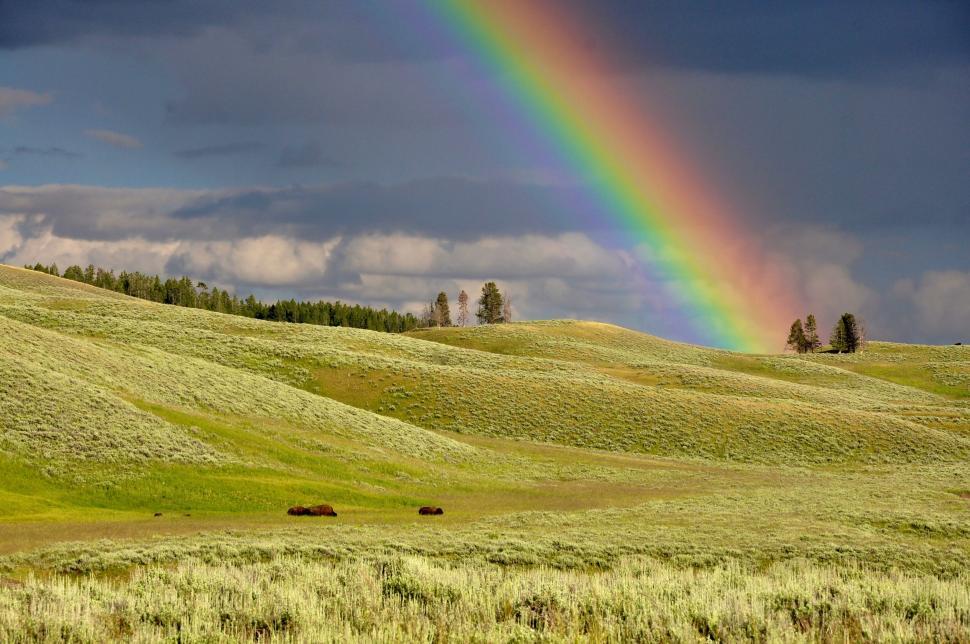
To seal this covenant, God sets the rainbow in the sky (Genesis 9:13). This is not a symbol of human identity or modern movements, it is God’s sign of His mercy, His promise, and His faithfulness. The rainbow is described like a bow hung up and facing away, a symbol of God laying down His weapon of judgment.
Every rainbow is a divine reminder that though humanity still struggles with sin, God deals with us in grace. It points forward to the new covenant in Christ, whose blood guarantees eternal peace between God and His people
Hebrews 9:15 (NLT)
“That is why he is the one who mediates a new covenant between God and people, so that all who are called can receive the eternal inheritance God has promised them. For Christ died to set them free from the penalty of the sins they had committed under that first covenant.“
Living in the Light of God’s Covenant
In conclusion, Genesis 8–9 teaches us that God meets worship with mercy, sustains creation with faithfulness, values life with holiness, and seals His promises with unchanging love. The covenant with Noah is not merely a story of the past, it’s a foundation for how we live today.
When life feels uncertain or when you’re tempted to doubt God’s goodness, remember the rainbow, not just in the sky, but in your heart. When you see a rainbow, remember not the world’s rebranding of it, but God’s ancient promise: He is faithful. He keeps His word. He never abandons His creation. And through Jesus, He has made an everlasting covenant of salvation.
Take time today to worship God as Noah did, before the work, before the tasks, before the worries. Thank Him for His covenant grace, commit yourself to honoring the life He has given you, and walk confidently in His promises.
The God who kept His word to Noah will keep His word to you.
Prayer:
“Lord, thank You for Your covenant of grace. Thank You for Jesus, who brings peace between us. Help me to live each day in gratitude, trusting that You always keep Your promises. Amen.”




