
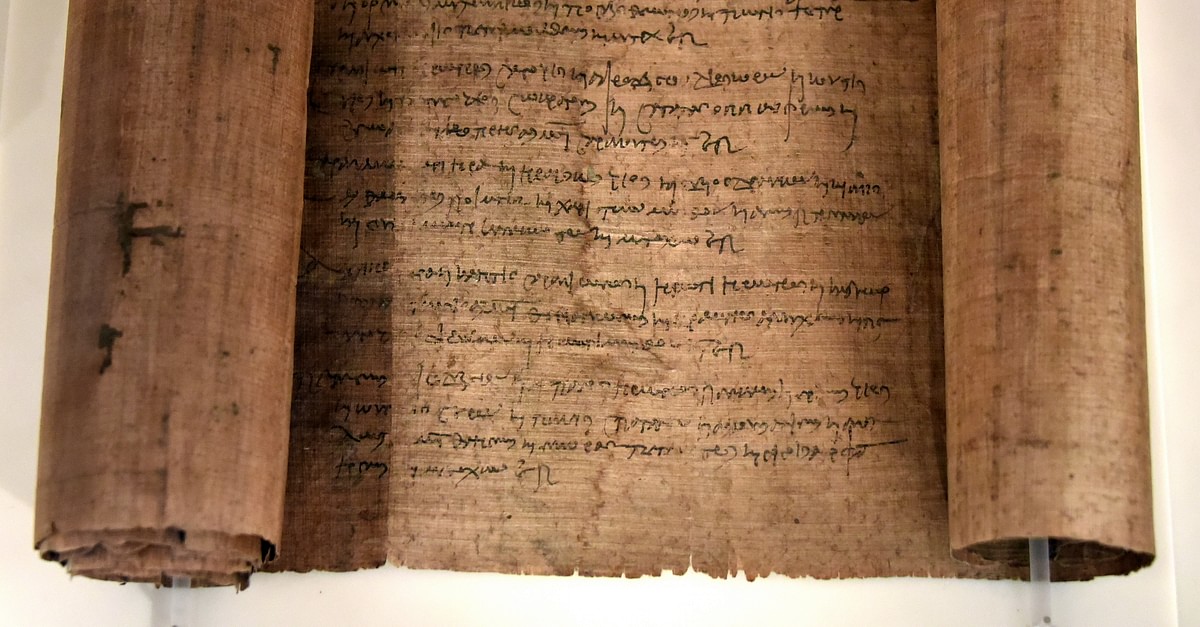

For many readers, genealogies are the passages we skim quickly, or skip entirely. Lists of unfamiliar names can feel dry, technical, and disconnected from everyday faith. Yet Scripture never wastes words. Luke’s genealogy of Jesus is not included to test our patience, but to deepen our understanding of who Jesus is and why He matters. Beneath the surface of this long list of names lies a powerful testimony of God’s faithfulness, His redemptive plan for all humanity, and His ability to work through broken people and ordinary generations to bring about extraordinary salvation.
A Genealogy That Speaks When We Learn to Listen
Luke introduces Jesus’ genealogy by saying He was “about thirty years old” when He began His ministry (Luke 3:23). The phrase reminds us that Jesus entered public ministry at the age associated with maturity and priestly readiness (Numbers 4:3). Luke then traces Jesus’ lineage backward, using the repeated Greek phrase υἱός (huios) meaning “son of”, to emphasize connection, identity, and continuity.
What appears at first glance to be repetitive actually declares something profound: God works through real people, real families, and real history. Each name represents a life shaped by grace, failure, obedience, or repentance. Far from being boring, genealogies testify that God’s promises are not abstract, they are fulfilled through generations.
This list invites us to reflect on our own stories. If God is willing to work through centuries of imperfect people to bring forth His Son, then no life is insignificant in His plan (Psalm 145:4).
Psalm 145:4 (NLT)
Let each generation tell its children of your mighty acts; let them proclaim your power.
Why Luke’s Genealogy Differs from Matthew’s
Readers often notice that Luke’s genealogy differs from the one found in Matthew 1. This is not a contradiction, but a theological emphasis and we need to understand that both writers wrote to a different audience. Matthew, writing to a Jewish audience, traces Jesus’ legal lineage forward from Abraham, focusing on Jesus as the Jewish Messiah and rightful King, highlighting royal succession through David and Solomon.
Luke, however, being a physician and writing to a global audience, traces the biological line backward, from Jesus all the way to Adam. Luke’s genealogy starts at Adam and goes to David. Matthew’s genealogy starts at Abraham and goes to David. When the genealogies arrive at David, they split with David’s sons: Nathan (Mary’s side) and Solomon (Joseph’s side).
Luke’s purpose is broader and more universal. Writing primarily to a Gentile audience, he emphasizes that Jesus is not only the Messiah of Israel, but the Savior of all humanity. By ending with “Adam, the son of God,” Luke declares that Jesus stands in solidarity with the entire human race.
Romans 5:18-19 (NLT)
Yes, Adam’s one sin brings condemnation for everyone, but Christ’s one act of righteousness brings a right relationship with God and new life for everyone. Because one person disobeyed God, many became sinners. But because one other person obeyed God, many will be made righteous.
The completeness of Luke’s genealogy is striking. It moves through David, beyond Abraham, and all the way to creation itself. The message is clear: Jesus steps into the full story of humanity in order to redeem it from the inside out (Hebrews 2:14–17).
Hebrews 2:14-17 (NLT)
Because God’s children are human beings—made of flesh and blood—the Son also became flesh and blood. For only as a human being could he die, and only by dying could he break the power of the devil, who had the power of death. Only in this way could he set free all who have lived their lives as slaves to the fear of dying. We also know that the Son did not come to help angels; he came to help the descendants of Abraham. Therefore, it was necessary for him to be made in every respect like us, his brothers and sisters, so that he could be our merciful and faithful High Priest before God. Then he could offer a sacrifice that would take away the sins of the people.
Names That Tell a Redemption Story
Several names in Luke’s genealogy carry deep biblical significance. David appears, reminding us of God’s covenant promise that a righteous King would come from his line (2 Samuel 7:12–16). Yet Luke does not trace Jesus through Solomon, but through Nathan, another son of David. This avoids the royal curse pronounced on Jeconiah’s line (Jeremiah 22:30) and highlights God’s wisdom in preserving the promise apart from human corruption.
Further back, we encounter Abraham, the man of faith, through whom all nations would be blessed (Genesis 12:3; Galatians 3:8). Beyond him stands Noah, a man preserved by grace in a corrupt world, and then Adam, whose fall brought sin, but whose lineage ultimately leads to Christ, the second Adam (1 Corinthians 15:45).
1 Corinthians 15:45 (NKJV)
And so it is written, “THE FIRST MAN ADAM BECAME A LIVING BEING.” The last Adam became a life-giving spirit.
Luke’s careful structure reminds us that God’s redemptive plan was never improvised. Every generation, even those marked by failure, moved history toward Christ.
Jesus, the Son of God, and Our Place in the Story
Luke ends the genealogy with a powerful phrase: “Adam, the son of God.” This is not accidental. By using υἱός (huios) again, Luke draws a contrast. Adam was created as God’s son but fell through disobedience. Jesus, the true Son of God, succeeds where Adam failed, remaining obedient and faithful (Luke 4:1–13; Romans 5:12–21).
This genealogy prepares us for what follows in Luke’s Gospel: Jesus confronting temptation, restoring what was broken, and bringing humanity back into right relationship with God. The list of names reminds us that salvation is not detached from history, it enters it.
In conclusion, Luke’s genealogy invites us to slow down and see God’s hand at work across time. It teaches us that our faith is rooted in history, our Savior is connected to humanity, and our lives matter in God’s unfolding story.
Our response is to trust God with our own story, past, present, and future, and to believe that He is at work even when we cannot see the full picture. When you look at your own family and the wrongs and the sins, don’t allow that to stop you from reaching your God-given purpose. It hasn’t stopped God, and you are not the sum total of your or your family’s mistakes.
Prayer
Faithful God, thank You for weaving Your redemptive plan through generations of imperfect people. Thank You that Jesus entered our history to redeem our humanity. Help us to trust that our lives are part of Your greater story, and to walk in faith, knowing that You are faithful to Your promises. May we find our identity in Christ, the true Son of God, and live in hope because of Him. Amen.




