

Exodus 3:1-6 (NKJV)
“Now Moses was tending the flock of Jethro his father-in-law, the priest of Midian. And he led the flock to the back of the desert, and came to Horeb, the mountain of God. And the Angel of the LORD appeared to him in a flame of fire from the midst of a bush. So he looked, and behold, the bush was burning with fire, but the bush was not consumed. Then Moses said, “I will now turn aside and see this great sight, why the bush does not burn.” So when the LORD saw that he turned aside to look, God called to him from the midst of the bush and said, “Moses, Moses!” And he said, “Here I am.” Then He said, “Do not draw near this place. Take your sandals off your feet, for the place where you stand is holy ground.” Moreover He said, “I am the God of your father—the God of Abraham, the God of Isaac, and the God of Jacob.” And Moses hid his face, for he was afraid to look upon God.”
Moses was not looking for a miracle.
He was tending sheep, ordinary work, a familiar routine, a life he had settled into after disappointment, failure, and delay. Then God interrupted the ordinary with the extraordinary: a bush burning, yet not consumed.
But before God revealed His name… Before He revealed His plan… Before He revealed Moses’ calling…
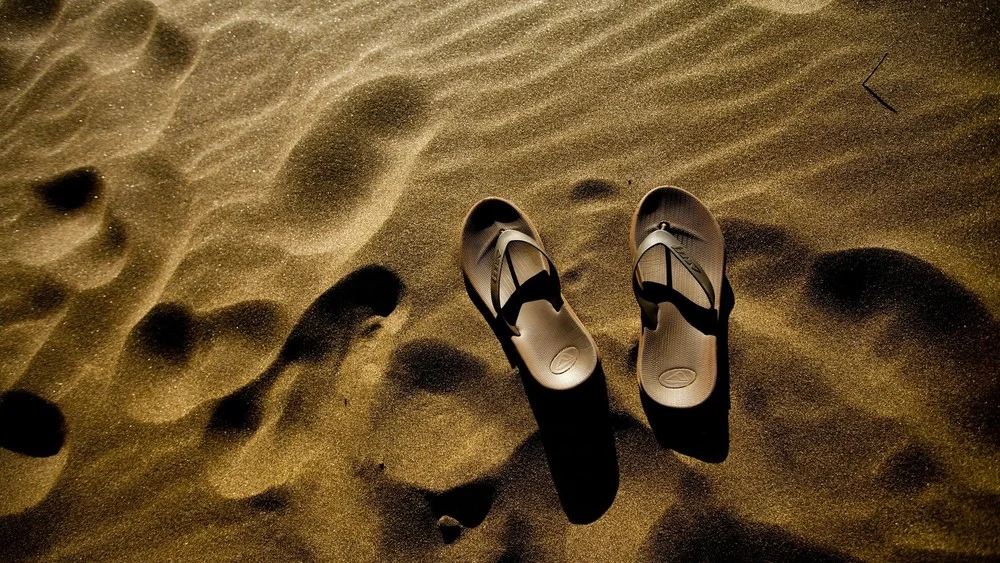
He gave a command: “Do not come any closer. Take off your sandals, for the place where you are standing is holy ground.”
God encounters us where we are—but he will not leave us as we are
Moses met God in the wilderness, not in a palace or a temple. God is not intimidated by our deserts, our obscurity, or our hidden seasons. But notice this: God did not say, “Moses, I will come to where you are.”
He said, “Stop. Remove something.”
Before Moses could move forward, something had to come off.
Shoes represent what separates us from holy ground
Shoes were made from dead animal skin. They carried the dust, dirt, and residue of every place Moses had walked. Symbolically, the shoes represent:
- Old identities
- Past mindsets
- Fleshly ways of thinking
- Self-reliance
- Cultural conditioning
- Fear shaped by previous failures
God was saying: “You cannot encounter Me while still standing on what once protected you.” What once helped Moses survive the desert would now prevent him from standing fully present before God.
Removing the shoes is an act of surrender and vulnerability
Bare feet on the ground means:
- No protection
- No distance
- No barriers
God required Moses to feel the ground. To become aware. To become vulnerable.
You cannot experience the holiness of God while holding onto control. You cannot receive a new calling while wearing old assumptions. God does not speak His destiny over us until we strip ourselves of our former selves.
Holy ground Is not about location—It’s about posture
The ground was not holy because of geography. It was holy because God was present.
When God is present:
- Ordinary ground becomes holy
- Ordinary people become chosen
- Ordinary moments become turning points
But holiness demands a response. God’s presence requires reverence, humility, and repentance. Removing the shoes was Moses saying: “I recognize You are God—and I am not.”
You cannot carry Egypt Into a deliverance assignment
Moses was about to be sent back to Egypt. But Egypt had to come off him before he could go back to it. God was preparing a deliverer—but first, He prepared the heart.
You cannot break chains while still wearing them. You cannot lead people out of bondage while still thinking like a slave. You cannot walk into purpose with yesterday’s identity.
The fire that does not consume is the grace that transforms
The bush burned but was not destroyed. This is the nature of God’s holiness:
- It purifies without annihilating
- It exposes without rejecting
- It transforms without consuming
God was showing Moses: “I will be with you in the fire—and you will not be destroyed.”
What shoes is God asking you to remove?
- Old hurts?
- Old labels?
- Old theology that limits God?
- Old coping mechanisms?
- Old self-images?
Before God sends you, He strips you. Before He promotes you, He humbles you. Before He reveals His power, He reveals His holiness.
In closing, there is a burning bush moment for all of us. A moment when God interrupts our routine and calls our name. But the question is not: Will God speak?
The question is: Will we remove our shoes? Because the encounter that changes everything always begins with surrender.




