
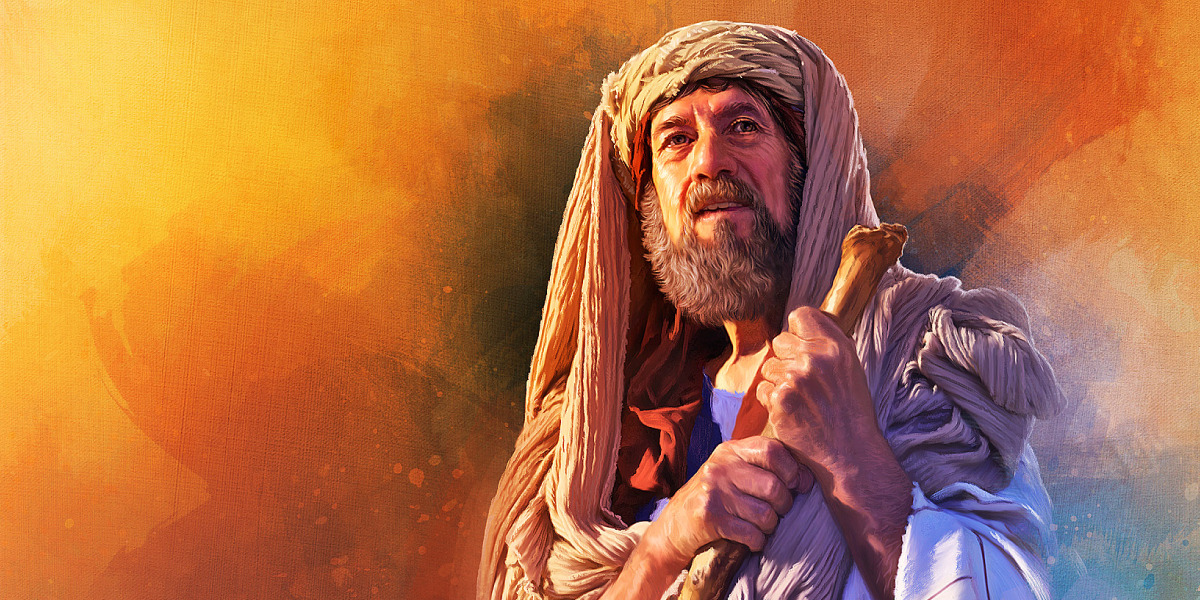

Romans 4 stands as a beautiful reminder that salvation was never about human achievement. Long before Christ’s earthly life, long before the Law was given, and long before religious systems were established, God had already revealed the heart of the gospel through one man, Abraham. His story is not merely history; it is theology in motion. Paul brings Abraham before us to show that the way to God has always been the same: faith alone. Abraham’s righteousness did not come from spiritual performance, religious ritual, or moral superiority. It came because he believed the God who speaks truth and keeps His promises.
Through Abraham, Paul clears away every misconception about salvation and gives us a gospel so simple, so liberating, and so powerful that it breaks every chain of self-reliance. Let us walk through this passage and drink deeply of the grace that saved Abraham, and saves us today.
Abraham Was Justified by Faith Alone
Paul begins with a question: What did Abraham discover about being made right with God? His answer comes straight out of Genesis 15:6: “Abraham believed God, and it was counted to him as righteousness.”
The key word here is logizomai (λογίζομαι), meaning “to credit,” “to place into one’s account,” or “to reckon.” This word shows that righteousness is not something we achieve but something God assigns to us as an act of His grace. Abraham was not righteous in himself; righteousness was credited to him because he trusted what God had spoken.
This becomes even clearer when we consider how often Scripture teaches that righteousness does not come through human effort. Paul already established this earlier in Romans 3:21–22, where the righteousness of God is said to be revealed “apart from the law” and given “through faith in Jesus Christ.” Abraham’s faith, then, was not simply positive thinking or optimism. It was the placing of his whole confidence in the God who keeps His word.
This is why Paul uses Abraham as the example for all believers. Abraham was justified the moment he trusted, before any act of obedience, before any recorded act of devotion, before any outward sign. The gospel has always worked the same way: God provides righteousness, and we receive it by faith.
Abraham Was Not Justified by Works
Paul immediately addresses the alternative idea, that Abraham might have earned his right standing before God. If that were true, Paul says, then Abraham would have had something to boast about. But “not before God.” No human being, no matter how devout, can stand before the holiness of God and present his works as evidence of righteousness.
Paul contrasts working with believing. The one who works receives wages, or misthos (μισθός), something earned, a debt owed. But the one who believes receives righteousness as a gift of grace, not as payment. This distinction is at the very core of the gospel. If salvation were earned, it would not be grace. If righteousness could be produced by effort, the cross would be unnecessary.
Then Paul makes a shocking and glorious statement: “God justifies the ungodly.” The Greek term asebēs (ἀσεβής) refers to the irreverent, the spiritually unworthy, those who have no merit to stand before God. This means God does not wait for us to clean ourselves up. He does not reserve righteousness for the religiously impressive. He declares righteous those who come to Him with nothing but faith in His promise.
This truth dismantles one of the oldest misconceptions in human history, the idea that “good people” go to heaven simply because they are good. If a morally upright person trusts in his moral record, he remains unjustified. But the raw, repentant sinner who believes in Christ is justified instantly. Abraham’s life proves it: he was not declared righteous because of long-standing obedience, but because he believed God. This is the Gospel!
Salvation Has Always Been by Faith, Not Ritual
Paul then turns to circumcision, which was considered the great sign of belonging to the covenant people. But Paul explains that Abraham received righteousness before he was circumcised. Circumcision, peritomē (περιτομή), was never the source of Abraham’s righteousness. It was merely a sign, a seal of the faith he had already exercised.
This has enormous implications. It means righteousness was never tied to religious rituals. Abraham was justified years before the outward sign appeared. His justification was internal, not external, by faith, not ceremony.
Paul supports this by quoting David in Psalm 32, celebrating the blessedness of forgiveness. The word David uses for “blessed,” makarios (μακάριος), speaks of deep spiritual joy rooted in God’s grace. This blessing, Paul says, is not for the religious elite but for all who believe, Jew or Gentile, circumcised or uncircumcised.
Thus Abraham becomes the father of all who believe, not because of a ritual performed on the body, but because of a faith alive in the heart. God’s blessing always begins on the inside. Faith comes first, blessing follows, and transformation comes after.
A Call to Rest in the God Who Justifies the Ungodly
Romans 4 lifts our eyes away from ourselves and fixes them on the God who saves. Abraham’s story is a loud and clear announcement that righteousness is not earned, deserved, or produced by human strength. It is counted, credited, granted through faith in Christ.
This means you do not have to impress God to be loved. You do not have to clean yourself before coming. You do not have to work to earn what God freely gives. Faith is simply the open hand that receives God’s grace.
Just as Abraham believed God, so we are invited to believe the God who justifies sinners, forgives freely, and transforms deeply.
Today, stop striving to earn what God freely gives. Stop trying to impress a God who already knows your weaknesses. Trust in the God who justifies sinners, and let Him count you righteous through Christ.
Prayer
Father, thank You for showing us through Abraham that righteousness comes only by faith. Thank You for counting us righteous not because we deserve it, but because Christ has made the way. Teach us to rest in Your grace, to abandon self-reliance, and to trust fully in the finished work of Jesus. Make our faith genuine, our hearts humble, and our lives a testimony of Your mercy. Just as Abraham walked before You in faith, help us to do the same.
In Jesus’ name, Amen.




